Introduction
As businesses continue to embrace digital transformation, traditional IT infrastructure is becoming increasingly difficult to manage. Maintaining on-premise servers, upgrading hardware, ensuring data security, and handling growing workloads often require significant time, money, and technical expertise. To overcome these challenges, organizations across industries are adopting Cloud Migration as a strategic solution.
Cloud Migration is the process of moving business applications, databases, workloads, and digital assets from on-premise infrastructure or legacy systems to cloud-based platforms. Instead of relying on physical servers, businesses use cloud environments to access computing resources, storage, software, and networking services over the internet.
Cloud migration offers much more than cost savings. It improves operational efficiency, enhances scalability, strengthens security, supports remote work, accelerates innovation, and enables businesses to respond more quickly to changing market demands. Whether you're a startup, a growing enterprise, or a large organization, migrating to the cloud can simplify operations while improving overall business performance.
However, successful cloud migration requires careful planning, selecting the right cloud strategy, preparing existing systems, and ensuring minimal disruption during the transition.
In this comprehensive guide, you'll learn how Cloud Migration improves business efficiency, explore its benefits, understand different migration strategies, discover implementation best practices, avoid common mistakes, and learn why cloud technology has become a key driver of business growth in 2026.
What Is Cloud Migration?
Cloud Migration is the process of transferring digital resources such as applications, databases, files, virtual machines, and workloads from local infrastructure to cloud environments.
Businesses may migrate to:
- Public cloud
- Private cloud
- Hybrid cloud
- Multi-cloud environments
Cloud migration allows organizations to access computing resources on demand while reducing dependence on expensive physical infrastructure.
What Is Cloud Migration?
Cloud Migration is when you move things like applications, databases and files from your computers to the cloud.
You can move these things to a few places, such as:
* Public cloud
* Private cloud
* Hybrid cloud
* Multi-cloud environments
Cloud Migration is good for businesses because it lets them use computer resources when they need them without having to buy a lot of expensive equipment. This way businesses do not have to depend on their computers as much. Cloud Migration is really about moving resources, like applications and databases to the cloud.
Why Businesses Are Moving to the Cloud
Modern businesses need flexible, secure, and scalable technology.
Cloud migration helps organizations:
- Reduce infrastructure costs
- Improve operational efficiency
- Enable remote work
- Increase business agility
- Strengthen disaster recovery
- Improve collaboration
- Scale resources instantly
- Accelerate innovation
These advantages make cloud technology an essential part of digital transformation.
Why Businesses Are Moving to the Cloud
businesses need technology that is flexible, secure and can grow with them.
Cloud migration helps businesses in ways:
* Reduce the costs of infrastructure
* Improve how efficiently they operate
* Make it possible for employees to work from anywhere
* Increase how quickly they can adapt to change
* Make disaster recovery stronger
* Improve how well teams work together
* Scale up or down resources away
* Speed up innovation
These benefits make cloud technology a key part of moving a business into the age with cloud technology.
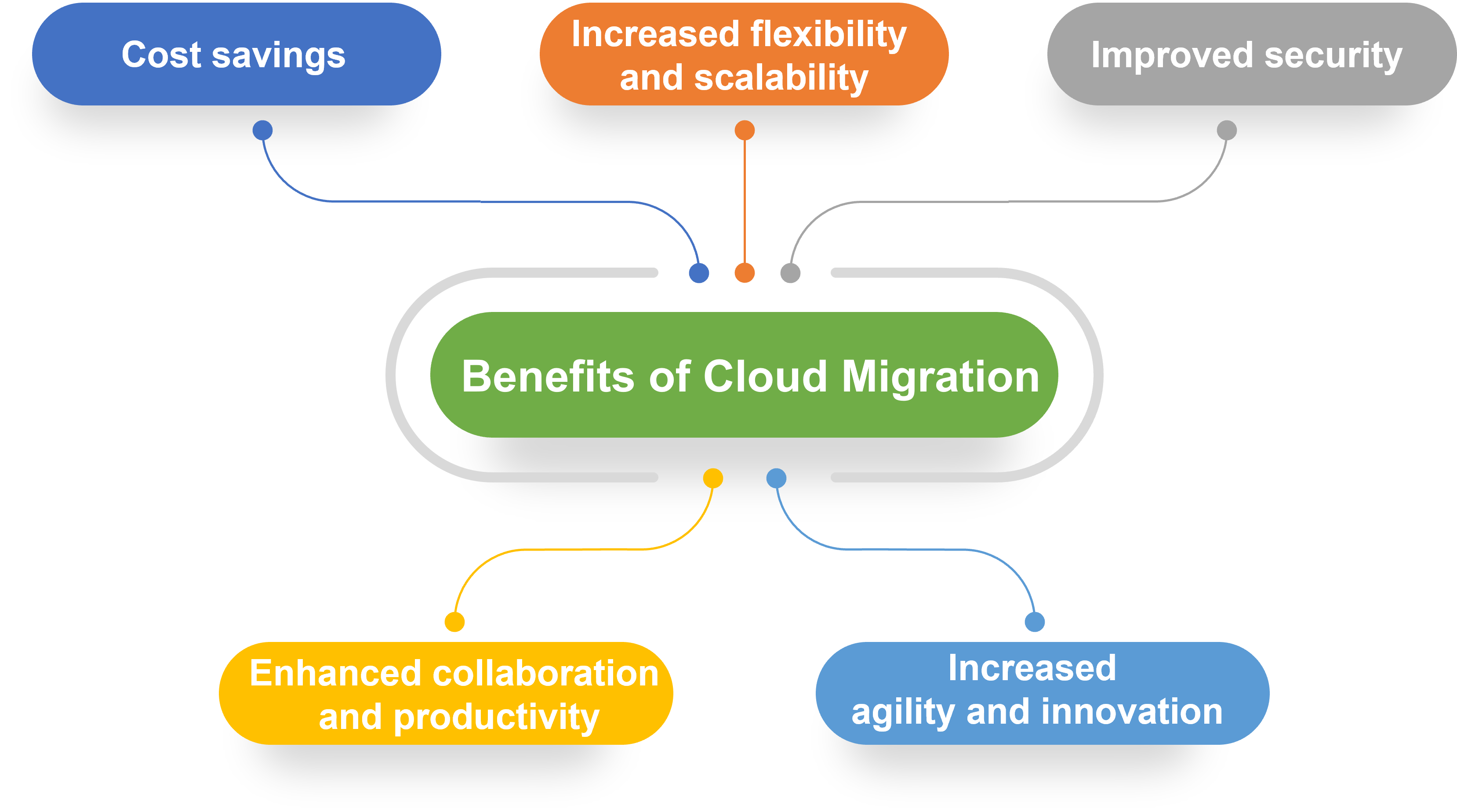
Benefits of Cloud Migration
1. Improved Business Productivity
Employees can securely access applications and business data from anywhere.
Cloud platforms enable:
- Remote collaboration
- Faster communication
- Real-time updates
- Centralized information
This improves overall productivity across departments.
2. Reduced IT Costs
Traditional infrastructure requires:
- Hardware purchases
- Maintenance
- Software upgrades
- Electricity
- Physical storage
Cloud services eliminate many of these expenses through subscription-based pricing.
3. Better Scalability
Cloud resources can be increased or reduced based on business needs.
Businesses can easily handle:
- Traffic spikes
- Seasonal demand
- Business expansion
- New projects
without investing in additional hardware.
4. Improved Security
Leading cloud providers offer:
- Data encryption
- Identity management
- Access controls
- Backup solutions
- Continuous monitoring
These features help protect sensitive business information.
5. Faster Business Operations
Cloud infrastructure improves system performance by reducing delays caused by outdated hardware.
Benefits include:
- Faster application performance
- Quick software deployment
- Reduced downtime
- Improved workflow efficiency
Why Businesses Are Moving to the Cloud
Businesses need technology that's flexible, secure and can grow with them.
Cloud migration helps businesses in ways:
* It reduces the costs of infrastructure.
* It improves how efficiently they operate.
* It makes it possible for employees to work from anywhere.
* It increases how quickly they can adapt to change.
* It makes disaster recovery stronger.
* It improves how well teams work together.
* They can scale up or down resources easily.
* It speeds up innovation.
These benefits make cloud technology a key part of moving a business into the age of cloud technology with cloud technology. Businesses are moving to the cloud.
How Cloud Migration Improves Business Efficiency
Centralized Data Management
Cloud platforms store information in one secure location.
Employees can easily access:
- Customer records
- Project files
- Financial reports
- Operational documents
Centralized access improves collaboration and decision-making.
Supports Remote Work
Cloud technology enables employees to work securely from:
- Offices
- Homes
- Client locations
- Mobile devices
This flexibility increases productivity while supporting hybrid work environments.
Improves Collaboration
Teams can collaborate in real time by sharing documents, updating projects, and communicating across locations without delays.
Departments remain synchronized, reducing duplication of work.
Automates Business Processes
Many cloud platforms integrate automation features.
Businesses can automate:
- Invoice generation
- Customer notifications
- Data backups
- Workflow approvals
- Reporting
Automation reduces manual effort while improving consistency.
Enhances Business Continuity
Unexpected disruptions such as hardware failures, cyberattacks, or natural disasters can affect operations.
Cloud-based backup and disaster recovery solutions help businesses recover quickly with minimal downtime.
Cloud Migration Strategies
Organizations choose different migration approaches depending on business requirements.
Rehosting
Move applications without major changes.
Often called "Lift and Shift."
Replatforming
Make minor optimizations before migrating.
Improves performance while minimizing redevelopment.
Refactoring
Redesign applications specifically for cloud environments.
Offers maximum flexibility and long-term benefits.
Repurchasing
Replace legacy software with cloud-based SaaS applications.
Retiring
Remove outdated systems that no longer provide business value.
Cloud Migration Best Practices
Assess Existing Infrastructure
Identify:
- Applications
- Databases
- Dependencies
- Security requirements
A complete assessment reduces migration risks.
Define Business Goals
Determine objectives such as:
- Cost reduction
- Better scalability
- Improved security
- Faster deployment
- Enhanced collaboration
Clear goals guide migration planning.
Create a Migration Roadmap
Develop a structured plan covering:
- Timeline
- Priorities
- Testing
- Rollout strategy
- Backup plans
Planning minimizes disruptions.
Ensure Data Security
Protect sensitive information by implementing:
- Encryption
- Access controls
- Authentication
- Compliance policies
Security should remain a top priority throughout the migration process.
Test Before Full Deployment
Pilot testing helps identify:
- Performance issues
- Compatibility problems
- Security risks
Testing reduces implementation failures.
Common Cloud Migration Challenges
Businesses may encounter:
- Legacy system compatibility
- Data migration complexity
- Downtime risks
- Security concerns
- Employee training requirements
- Integration challenges
Proper planning significantly reduces these risks.
Role of AI in Cloud Migration
Artificial Intelligence enhances cloud environments through:
- Predictive analytics
- Automated monitoring
- Intelligent resource allocation
- Security threat detection
- Performance optimization
AI improves efficiency while reducing manual management.
Businesses modernizing their infrastructure often invest in AI & Cloud Solutions to implement scalable cloud platforms, automate operations, improve data management, and create intelligent business systems that support long-term digital transformation.
Cloud Migration Across Different Industries
Cloud technology benefits almost every industry.
Examples include:
- Healthcare
- Retail
- Finance
- Manufacturing
- Education
- Logistics
- Hospitality
- Information Technology
- Real Estate
- Professional Services
Each industry gains greater flexibility, improved collaboration, and stronger operational efficiency.
Future Trends in Cloud Computing
Cloud technology continues evolving rapidly.
Emerging trends include:
- Artificial Intelligence integration
- Serverless computing
- Multi-cloud strategies
- Edge computing
- Hybrid cloud environments
- Cloud-native development
- Intelligent automation
- Zero Trust security
- Sustainable cloud infrastructure
- Cloud-based analytics
Businesses adopting these innovations remain more competitive.
Organizations requiring tailored cloud platforms often choose Custom Software Development Services to build cloud-native applications, modernize legacy systems, integrate enterprise software, and create scalable digital solutions that align with specific business objectives.
Common Cloud Migration Mistakes to Avoid
Avoid these common mistakes:
- Migrating without planning
- Ignoring security requirements
- Underestimating costs
- Poor data backup strategy
- Lack of employee training
- Choosing the wrong cloud model
- Skipping testing
- Failing to monitor post-migration performance
Avoiding these issues ensures a smoother migration process.
Measuring Cloud Migration Success
Monitor key performance indicators such as:
- Infrastructure cost savings
- Application performance
- Employee productivity
- System uptime
- Customer satisfaction
- Resource utilization
- Deployment speed
- Return on Investment (ROI)
Continuous monitoring helps maximize long-term value.
Conclusion
Cloud Migration has become a strategic investment for businesses seeking greater efficiency, flexibility, and long-term growth. By moving applications, data, and workloads to the cloud, organizations can reduce operational costs, improve collaboration, strengthen security, and respond more quickly to changing business needs.
Successful migration requires careful planning, selecting the right cloud strategy, protecting business data, and continuously optimizing cloud environments after deployment. Businesses that embrace cloud technology are better equipped to support remote work, automate operations, scale resources efficiently, and accelerate innovation.
As cloud computing continues to evolve alongside Artificial Intelligence and automation, organizations that invest in cloud migration today will be well-positioned to remain competitive, improve productivity, and build a resilient digital foundation for the future.